Key Operational Priorities for W Miami Exhibit Coordination
Venue-specific manuals and event platform requirements
Brickell district routing and urban traffic timing
Exhibitor-appointed contractor communication protocols
Integration with Biscayne Bay corporate program themes
Access to categorized South Florida supplier network
Differentiation from Miami Beach and airport-west scales
Regional connectivity across Miami-Dade and Broward
Miami planning context
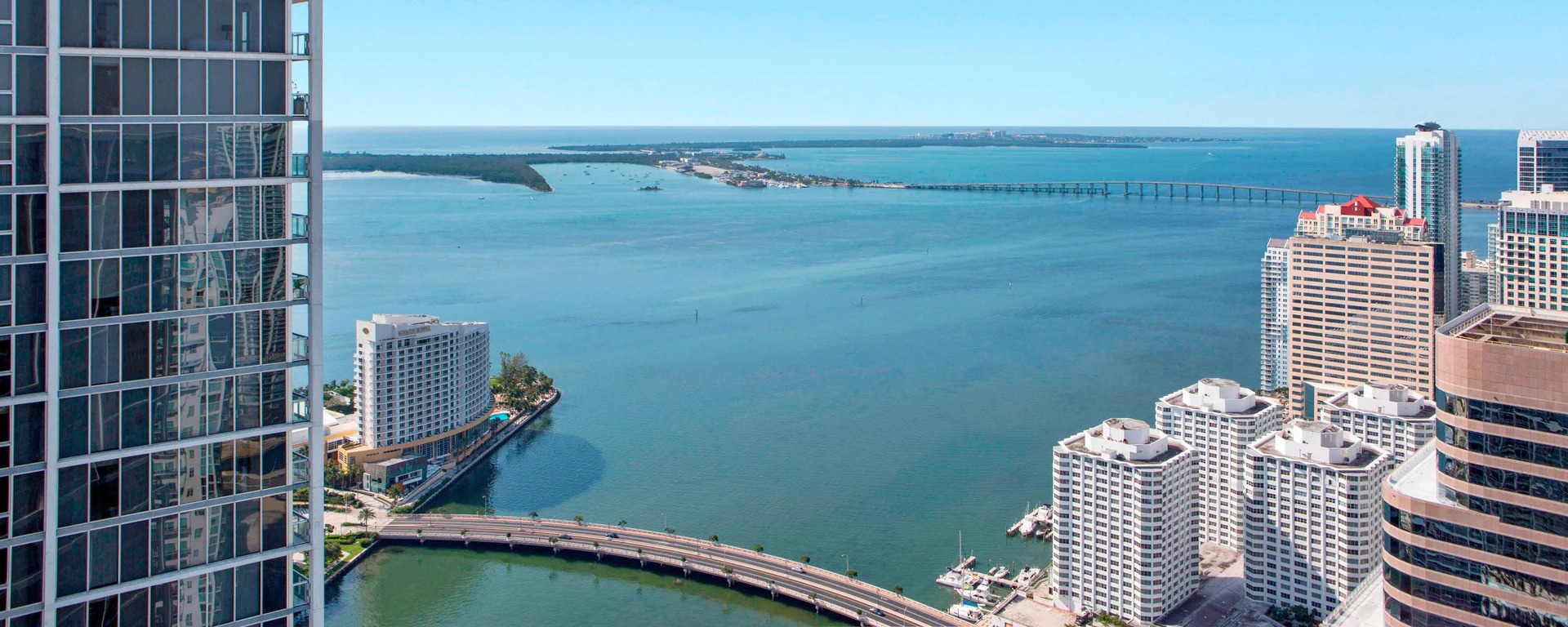
W Miami at 485 Brickell Avenue functions as a conference hotel that redefines business travel by offering a downtown oasis amid the intensity of Miami's Wall Street of the Americas. This positioning supports targeted corporate programs where custom exhibits enhance sponsor activations, investor presentations, and high-density networking within the Brickell district. Rather than competing with large-scale trade show floors, the venue contributes to the Downtown, Brickell, and Biscayne Bay Core cluster that prioritizes sophisticated urban events tied to Biscayne Bay and Miami's business core. Coordination here demands attention to venue-specific operational details and neighborhood routing that differ from the primary convention assets along Collins Avenue or the airport-west belt.
The broader Miami meetings market features thirty-one verified venues spanning Miami Beach, downtown, airport-adjacent properties, and north coastal resorts, with real demand extending into Broward County as a connected operating region. the Miami Beach Convention Center provides 1.4 million square feet of meeting and event space including nearly 500,000 square feet of exhibit space, a 60,000 Square Foot Grand Ballroom, a 20,000 Square Foot Junior Ballroom, and 84 breakout rooms. in contrast, Brickell conference hotels like W Miami host more focused activations where exhibits must deliver impact within the spatial and logistical constraints of urban corporate environments. This district-level differentiation influences design priorities, material timing, and integration with the supplier ecosystem maintained by the Greater Miami Convention and Visitors Bureau.
Planning resources for W Miami events emphasize venue-driven guidelines, exhibitor-appointed contractor coordination, and access to categorized suppliers for audiovisual services, catering, destination management, transportation, employment services, and entertainment. the GMCVB supplier directory and convention sales team offer established pathways for logistics and support without assuming uniform rules across properties. This approach treats Miami-Dade and Broward as an integrated market for overflow programs, incentive events, and complementary activations while maintaining strict fidelity to each venue's manual and show-specific requirements.
Brickell's Role Within Miami's Segmented Meetings Landscape
The Downtown, Brickell, and Biscayne Bay Core cluster occupies a specialized position in South Florida's meetings market by supporting investor events, product launches, sponsor activations, and high-density corporate programs that leverage proximity to financial institutions and the waterfront. W Miami contributes to this environment as a conference hotel where exhibits function as precision tools for targeted engagement rather than volume-driven display solutions. This contrasts with the Miami Beach Convention Center's 500,000 square feet of versatile exhibit space that accommodates large-scale trade shows or the 100,000 square feet of exhibition space at the Miami Airport Convention Center. Operational planning for Brickell therefore prioritizes intimate audience interactions, sophisticated brand storytelling, and smooth transitions between meeting sessions and networking zones.
District-level nuances become evident in how material flows and attendee movement align with the urban grid of Brickell Avenue and its connections to Biscayne Boulevard. These patterns require earlier freight scheduling and tighter coordination windows than those available at beachfront or west-side properties where dedicated loading infrastructure supports heavier equipment movements. Exhibits destined for W Miami must account for these realities to maintain the professional atmosphere expected by executives who select the property for its balance of business focus and recharge amenities. the result is a planning discipline that treats each activation according to its specific venue context instead of applying generic conventions from larger exhibition halls.
This differentiation extends to thematic alignment where Biscayne Bay views and the international commerce character of the financial corridor can inform exhibit graphics and interactive elements. When properly coordinated, displays reinforce the venue's identity as a downtown oasis without overwhelming the recharge-oriented business experience that distinguishes W Miami from more utilitarian conference facilities. Such attention to nuance helps exhibitors achieve measurable outcomes in environments where decision-makers gather for substantive dialogue rather than broad trade show browsing.
Logistics Coordination for Urban Core Conference Hotels
Neighborhood routing in Brickell introduces distinct variables for exhibit delivery and installation that differ from the dedicated freight corridors serving the Miami Beach Convention Center or the airport-west properties optimized for trucking access. Planners must map timing against downtown traffic flows, construction variables along Brickell Avenue, and the operational windows established by the specific hotel platform at W Miami. These details underscore the market note that venue sections should address loading realities, routing, exhibitor-appointed contractor coordination, and freight timing rather than generic descriptions.
Effective preparation involves advance alignment with the property's event guidelines to ensure materials move from curb to meeting space without disrupting regular business activities in the financial district. This includes precise scheduling for setup, show days, and removal phases that respect both the venue's policies and the expectations of corporate attendees who value efficiency. the connected nature of the South Florida market means that lessons learned from one Brickell program can inform complementary events at nearby downtown assets such as the James L. Knight Center or the Miami Convention Center, creating continuity across related activations.
By focusing on these operational specifics, coordination resources help prevent delays that could compromise the recharge elements built into W Miami's business travel model. the emphasis remains on manual-driven decisions where each show's documentation dictates acceptable practices instead of presuming open access or standardized procedures across Miami-Dade and Broward properties. This disciplined approach supports reliable execution while respecting the individual character of conference hotels within the urban core.
Mapping freight paths against Brickell traffic patterns
Securing confirmed installation and removal windows
Aligning with property-specific material handling rules
Preparing contingency plans for urban access delays
Engaging the Regional Supplier Ecosystem for W Miami
The Greater Miami Convention and Visitors Bureau supplier section documents a broad ecosystem with distinct categories for audiovisual and film services, caterers, destination management companies, transportation, employment services, and entertainment booking. These resources become instrumental when assembling support for exhibits at W Miami, allowing planners to match specialized providers with the technical, logistical, and creative requirements of Brickell-based corporate events. This network-driven model reflects the mixed vendor environment that characterizes South Florida rather than any single prescriptive labor structure.
Suppliers familiar with downtown venues understand the tighter spatial constraints and elevated aesthetic expectations typical of financial district programs. Audiovisual partners can configure presentation systems that integrate with W Miami's meeting rooms while transportation providers manage last-mile delivery from regional staging points. the GMCVB's convention sales and services team further assists by offering guidance on contracting, room blocks, and logistics that intersect with exhibit coordination, creating a layered support framework for planners.
Utilizing this ecosystem requires early identification of which services the venue manages internally versus those open to outside partners according to the current exhibitor manual. Such due diligence ensures compliance and quality while avoiding assumptions about universal access. the resulting flexibility enables exhibitors to maintain brand standards across different event scales, from intimate W Miami activations to larger complementary programs at the Broward County Convention Center with its 350,000 square feet of contiguous exhibit space.
Design Approaches for Corporate Activations at W Miami
Exhibit design for W Miami events must respect the property's focus on redefining business travel through environments that support both intensive sessions and opportunities for recharge. This translates to displays that deliver concise, high-impact messaging without creating additional cognitive load for attendees who move between meetings and restorative spaces. Modular construction offers practical advantages in conference hotel settings where room configurations may shift between different segments of a multi-day program, allowing components to adapt without full reconstruction.
Visual and interactive elements should harmonize with the contemporary character of Brickell while reinforcing the international commerce themes associated with the Wall Street of the Americas. Graphics that reference Biscayne Bay or Miami's global trade position can strengthen relevance without dominating the attendee experience. the goal remains strategic engagement that aligns with investor and sponsor objectives rather than the broad awareness tactics suited to the 84 breakout rooms and grand ballrooms of the Miami Beach Convention Center.
Experienced coordination ensures that design choices account for ceiling heights, power access, and lighting conditions specific to the selected meeting spaces at W Miami. This venue-level attention prevents common mismatches that occur when assumptions from beach or airport properties are carried into downtown hotels. the outcome is an exhibit that enhances rather than competes with the professional atmosphere cultivated by the property.
Modular components for flexible room configurations
Concise messaging balanced with recharge considerations
Thematic references to Biscayne Bay and global trade
Lighting and AV integration with venue infrastructure
Regional Connectivity and Overflow Program Strategy
Miami's trade show economy extends beyond the primary anchor of the Miami Beach Convention Center to encompass downtown Brickell, the airport-west belt, and north coastal resorts, with Broward County serving as a meaningful spillover and complementary market. the Broward County Convention Center's current 350,000 square feet of exhibit space and stated expansion plans toward 1.2 million square feet illustrate the depth available when programs overflow from Miami-Dade venues. W Miami functions within this ecosystem as a strategic node for corporate and investor events that may precede, follow, or run parallel to larger gatherings.
Exhibit strategies developed for Brickell can therefore incorporate modularity and durability that support movement across regional venues when required. This connectivity encourages planners to view individual W Miami activations as segments within potentially larger South Florida campaigns rather than isolated occurrences. Coordination resources that maintain visibility into venue calendars across both counties help identify these opportunities and align display elements for consistent brand presence regardless of location.
Treating the region as one operating area also informs labor and supplier decisions by emphasizing the value of partners who maintain capabilities throughout Miami-Dade and Broward. the GMCVB supplier directory supports this integrated approach by listing providers equipped to operate across district boundaries. the result is greater efficiency and reduced duplication when exhibits serve multiple related events within the connected regional market.
Venue-Specific Guidelines and Exhibitor-Appointed Contractor Coordination
Official South Florida venue resources consistently frame planning around each property's individual event platform and manual. for W Miami and similar conference hotels, this means labor, house services, and outside vendor access are determined by the specific documentation for the program rather than market-wide generalizations. the findings confirm that convention centers, airport facilities, and resort campuses each maintain distinct approaches, requiring organizers to verify current rules for every activation.
Exhibitor-appointed contractors play a central role in executing custom exhibits at Brickell properties where precise timing and quality control directly affect the attendee experience. Clear advance communication among the organizer, the venue, the general service contractor if applicable, and the EAC helps establish responsibilities for installation, supervision during show hours, and dismantle. This coordination mitigates risks in urban environments where space for staging and movement is more constrained than at dedicated exhibition facilities.
Documentation of all agreements, schedules, and compliance points forms the foundation for smooth execution. by maintaining this disciplined, venue-driven focus, planners uphold the professional standards associated with W Miami while operating safely within the mixed supplier ecosystem. the approach aligns with GMCVB guidance that highlights collaboration among high-quality providers to create successful outcomes without presuming any single labor model applies universally across the region.
Review current exhibitor manuals before contracting
Establish clear communication channels with all parties
Document responsibilities for each phase of execution
Maintain flexibility to adapt to show-specific directives
Frequently Asked Questions About Exhibit Coordination at W Miami
Q: How does W Miami differ operationally from the Miami Beach Convention Center?
W Miami serves the Downtown, Brickell, and Biscayne Bay Core with focused corporate events, product launches, and sponsor activations, while the Miami Beach Convention Center offers 500,000 square feet of exhibit space, grand and junior ballrooms, and 84 breakout rooms for larger-scale trade shows. Planning for Brickell requires attention to urban routing, tighter setup windows, and venue-specific guidelines rather than dedicated convention center infrastructure.
Q: What supplier resources support exhibits at W Miami?
The Greater Miami Convention and Visitors Bureau supplier directory provides categorized support including audio-visual and film services, caterers, destination management companies, transportation, employment services, and entertainment booking. These partners enable venue-compliant coordination for Brickell events while drawing on the broad South Florida meetings ecosystem.
Q: How should labor and outside vendors be approached for W Miami events?
Arrangements follow venue-specific manuals, show organizer policies, and current event documentation rather than blanket market assumptions. the mixed supplier ecosystem allows access to qualified providers while requiring confirmation of acceptable practices for each individual program at the property.
Q: Why is district-level differentiation important for Brickell planning?
Brickell events emphasize high-density corporate programs, investor engagements, and Biscayne Bay connections that operate on different scales and rhythms than beachfront conventions or airport-west facilities optimized for freight. Exhibits must address urban traffic timing, neighborhood routing, and the recharge-focused business environment described for W Miami.
Q: Can exhibits developed for W Miami transfer to other regional venues?
Modular designs that respect venue-specific constraints often adapt effectively across the connected Miami-Dade and Broward market. This includes compatibility with larger facilities such as the Broward County Convention Center or complementary downtown properties when events form part of broader South Florida calendars.
Q: What planning resources exist for coordinating W Miami exhibits?
The GMCVB Convention Sales and Services team offers assistance with logistics and related elements while individual venue platforms provide property-specific guidance. Coordination focuses on exhibitor-appointed contractor protocols, freight timing, and integration with the documented supplier network for each activation.