Key Planning Elements for Hilton Miami Downtown Events
Venue-specific operational manuals and guidelines
Downtown Miami routing and freight timing requirements
Integration within the Biscayne Bay corporate cluster
Utilization of the GMCVB supplier ecosystem
Connections to regional convention assets across Miami-Dade and Broward
Design considerations that reference bayfront surroundings
Miami planning context
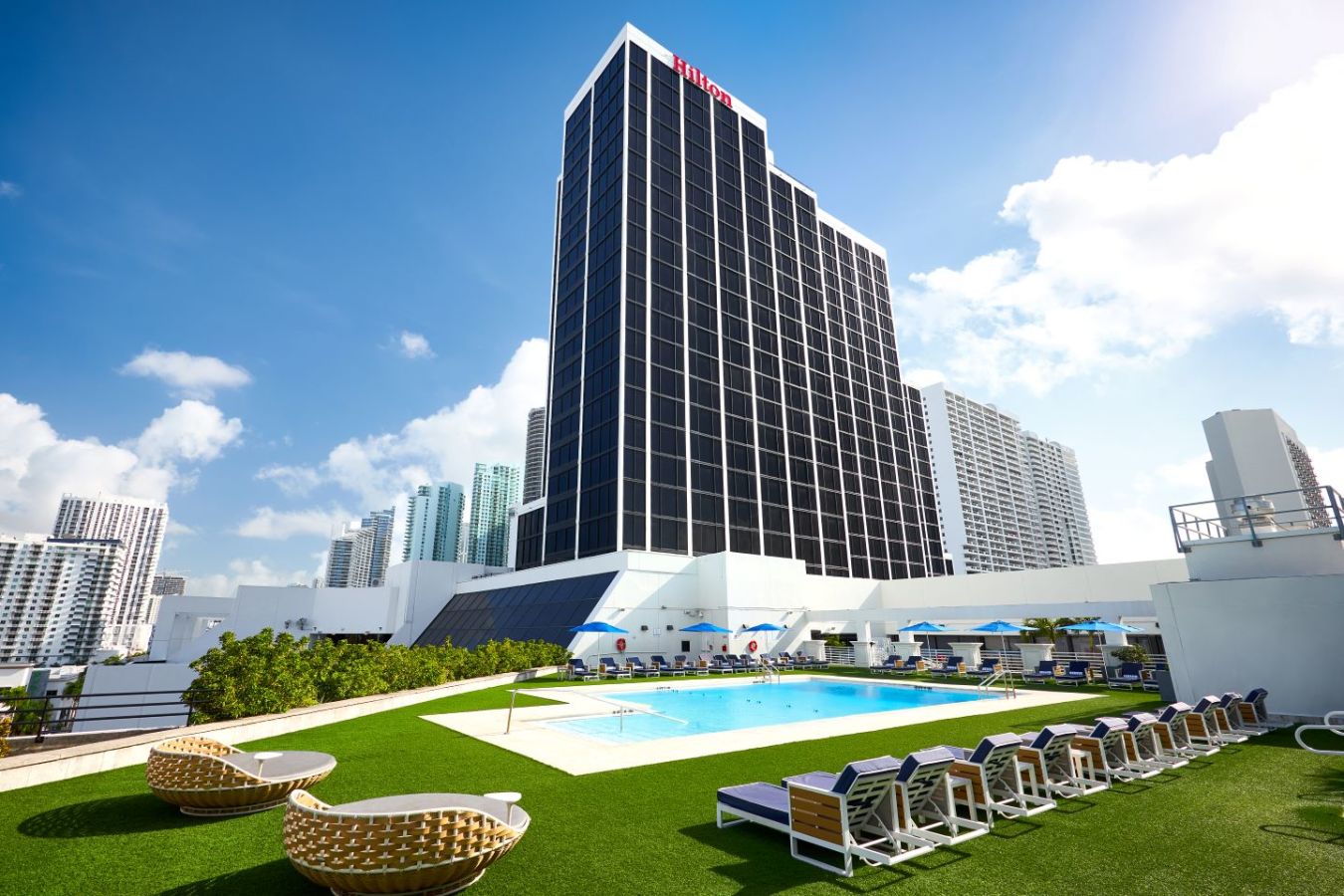
The Hilton Miami Downtown at 1601 Biscayne Boulevard occupies a distinctive position in Miami's Arts & Entertainment District, delivering Biscayne Bay views and immediate proximity to the Kaseya Center and Bayside Marketplace. This conference hotel supports targeted corporate gatherings, product launches, and focused exhibition components within the Downtown, Brickell, and Biscayne Bay Core cluster, where high-density business programs intersect with urban amenities and walkable access to dining, shopping, and entertainment.
Planning exhibits and related activations here demands attention to the specific characteristics of downtown venues rather than broad assumptions drawn from the Miami Beach Convention Center or airport facilities. the property functions as one element in Miami's connected trade show economy, which treats Miami-Dade and Broward counties as an integrated region for overflow, hybrid, and multi-venue events. Coordination therefore centers on venue manuals, neighborhood routing, freight timing, and alignment with the Greater Miami supplier directory.
As an authoritative planning resource, this overview equips organizers with operational context for successful execution at the Hilton Miami Downtown while emphasizing district-level nuances, exhibitor-appointed contractor protocols, and integration with the wider South Florida meetings infrastructure.
Strategic Position in the Downtown Miami and Biscayne Bay Cluster
The Hilton Miami Downtown forms a key node in the Downtown, Brickell, and Biscayne Bay Core cluster identified in official Greater Miami planning resources. This district supports investor conferences, product launches, sponsor activations, and targeted corporate exhibitions that benefit from the urban core's density and Biscayne Bay orientation. Unlike the primary convention corridor along Collins Avenue or the west-side airport belt, downtown properties emphasize proximity to financial institutions, cultural venues, and mixed-use developments that enhance attendee engagement without requiring extensive off-site transportation.
Events at this address gain from one-mile proximity to the Kaseya Center and Bayside Marketplace, enabling planners to construct smooth multi-location itineraries. This connectivity proves advantageous for programs that combine educational sessions, exhibition components, and experiential elements within a compact geographic radius. Neighborhood differentiation becomes critical: the Arts & Entertainment District presents distinct loading realities and pedestrian flow patterns that contrast with both beachfront resorts and industrial-adjacent convention centers.
Effective coordination begins with mapping these district-specific variables early. Organizers achieve better outcomes by treating the Hilton Miami Downtown as part of a layered Miami strategy rather than an isolated venue. This perspective aligns with broader market notes that position South Florida as a single operating region where downtown hotel events frequently complement larger activations at the Miami Beach Convention Center or Broward County facilities.
Biscayne Bay views for thematic exhibit integration
Walkable access to complementary attractions and dining
Alignment with high-density corporate and investor programs
Potential for hybrid programming with nearby arena facilities
Operational Logistics and Urban Routing Considerations
Miami's downtown core requires meticulous attention to neighborhood routing, delivery timing, and material handling protocols that differ from suburban or beachfront properties. for the Hilton Miami Downtown, planners must account for Biscayne Boulevard traffic patterns, municipal access restrictions, and the compact footprint typical of urban bayfront locations. Early documentation of these factors prevents delays during move-in and move-out phases, particularly when multiple exhibitors or concurrent events compete for shared infrastructure.
Freight coordination follows venue-specific directives rather than generalized market assumptions. Successful programs incorporate buffer periods for urban variables such as bridge crossings, peak-hour restrictions, and proximity to active waterfront zones. This disciplined approach supports the broader guidance that Miami trade show logistics should prioritize loading realities and exhibitor-appointed contractor alignment over generic descriptions of the destination.
Resourceful planning also evaluates how downtown operations connect with the airport-west belt, where heavier fabrication and warehousing activities may occur before final delivery to the Hilton Miami Downtown. Such integrated routing respects the market's division into distinct clusters while maintaining continuity across Miami-Dade County projects.
Utilizing the Greater Miami Supplier and Service Network
The official Greater Miami Convention and Visitors Bureau supplier directory provides categorized access to audio-visual specialists, caterers, destination management companies, transportation providers, and entertainment resources essential for events at the Hilton Miami Downtown. This ecosystem supports a mixed-vendor environment where each service component is selected according to the precise requirements of the program rather than any single provider's blanket coverage.
Planners benefit from this breadth when assembling teams for downtown exhibitions because no universal service framework governs all Miami venues. Instead, the Hilton Miami Downtown's platform, combined with show-specific instructions, determines acceptable partners and procedures. the directory's emphasis on high-quality, specialized suppliers enables coordination of sophisticated elements such as custom display integration, presentation technology, and attendee management within the bayfront setting.
This network-driven model aligns with the market's documented preference for venue-managed meeting platforms supplemented by outside expertise. by referencing the GMCVB resources, organizers can address the full spectrum of needs while maintaining compliance with individual property guidelines and regional event standards.
Audiovisual and presentation technology partners
Specialized catering aligned with hotel specifications
Transportation solutions for Biscayne Bay district movement
Destination management for multi-venue program continuity
Entertainment booking for sponsor and hospitality functions
Venue-Driven Labor and Contractor Coordination
Labor and service arrangements at the Hilton Miami Downtown follow the property's individual event manual, show organizer directives, and applicable documentation rather than any market-wide designation. This venue-specific positioning reflects the documented diversity across Miami and Broward properties, where convention centers, hotels, and resort campuses maintain distinct protocols for house services, exhibitor-appointed contractors, and outside vendors.
Safe planning language therefore centers on manual-driven coordination without assuming open access or blanket restrictions. the Greater Miami meetings landscape supports a flexible supplier ecosystem that accommodates varied requirements as long as all parties adhere to the live event paperwork and venue regulations. This approach minimizes compliance risk while enabling the professional execution expected at downtown Miami properties.
Experienced coordinators build review cycles into the timeline to verify labor categories, installation windows, and supervision requirements well before implementation. Such diligence ensures alignment between exhibitor needs, the Hilton Miami Downtown's operational platform, and the broader South Florida region's connected but differentiated venue rules.
Integration with Regional Miami Convention Assets
The Hilton Miami Downtown frequently serves as one component within larger regional programs that also engage the Miami Beach Convention Center's 500,000 square feet of exhibit space, 60,000 Square Foot Grand Ballroom, and 84 breakout rooms. Understanding these relationships allows planners to distribute elements according to each venue's strengths, whether leveraging downtown's corporate atmosphere for intimate activations or routing heavier exhibits to airport or Broward facilities.
Broward County Convention Center's 350,000 square feet of contiguous exhibit space and planned campus expansion further extend options for overflow or specialized components. When primary activity occurs at the Hilton Miami Downtown, strategic connections to these assets create comprehensive South Florida experiences that span Miami-Dade and Broward without forcing all programming into a single district.
Coordination resources emphasize clear mapping of dates, logistics handoffs, and audience flows between venues. This layered strategy respects the documented clusters ranging from the Miami Beach Collins Corridor through the airport-west belt to the north coastal extension, delivering operational efficiency and expanded program possibilities.
Complementary programming with the Miami Beach Convention Center
Spillover capacity through Broward County facilities
Airport convention options for logistics-intensive segments
North coastal resort extensions for hospitality elements
Exhibit Design Considerations for Biscayne Bay Settings
The Hilton Miami Downtown's panoramic Biscayne Bay views present distinctive opportunities for exhibit and environment design that reference the waterfront context and Miami skyline. Thoughtful integration of natural light, spatial orientation, and thematic elements can elevate brand storytelling while maintaining full compliance with venue installation parameters. Designs that acknowledge the setting often achieve stronger visitor connection than those that ignore the architectural and environmental context.
However, all creative decisions must reconcile with downtown operational constraints including ceiling heights, access points, and electrical specifications outlined in the property's guidelines. Iterative planning that incorporates both aesthetic goals and logistical realities produces installations that enhance rather than conflict with the hotel's bayfront character and the surrounding Arts & Entertainment District energy.
Resource teams experienced in urban Miami venues help translate concepts into functional, timely executions. This process prioritizes modularity suitable for hotel meeting spaces, sightline optimization that frames both displays and views, and materials that perform effectively under the lighting conditions typical of waterfront conference levels.
Timeline Development and Risk Management Best Practices
Comprehensive timelines for Hilton Miami Downtown events incorporate district-specific milestones for permitting, delivery, contractor coordination, and contingency planning. Early engagement with all stakeholders establishes clear accountability for each phase while building in flexibility for the variables inherent to downtown Miami operations. This structured yet adaptable framework supports the precision required for investor events, product launches, and exhibition components in a high-visibility urban setting.
Risk management focuses on documentation, redundant communication pathways, and scenario planning for common challenges such as traffic disruptions or concurrent events in the Biscayne Bay area. by referencing the full spectrum of Miami venue clusters and supplier resources, planners create resilient programs capable of delivering consistent results across varying scales and formats.
The ultimate objective remains professional execution that leverages the Hilton Miami Downtown's strengths within Miami's interconnected meetings market. Thorough preparation, venue-specific knowledge, and regional perspective distinguish high-performing gatherings and maximize return on investment for exhibitors and organizers alike.
Advance mapping of all logistical touchpoints
Multiple review cycles for labor and service confirmation
Contingency pathways for urban district variables
Clear documentation across all participating partners
Frequently Asked Questions About Hilton Miami Downtown Event Planning
Q: What makes the Hilton Miami Downtown suitable for corporate exhibitions and product launches?
Its location in the Arts & Entertainment District at 1601 Biscayne Blvd offers Biscayne Bay views and proximity to the Kaseya Center and Bayside Marketplace. the property supports investor events and high-density corporate programs as part of the Downtown, Brickell, and Biscayne Bay Core cluster within Miami's connected regional meetings market.
Q: How should planners approach labor and contractor arrangements for this venue?
All arrangements remain venue-driven and manual-specific. Consult the Hilton Miami Downtown event guidelines, show organizer requirements, and applicable documentation. the broader South Florida market supports a supplier ecosystem for AV, transportation, and related services without applying blanket labor rules across properties.
Q: Can events at the Hilton Miami Downtown integrate with larger regional conventions?
Yes. Programs here often complement activities at the Miami Beach Convention Center with its 500,000 square feet of exhibit space or the Broward County Convention Center. Treating Miami-Dade and Broward as one connected region enables strategic distribution of components across venue clusters for optimal scale and logistics.
Q: What supplier resources support exhibitions in the downtown Miami area?
The Greater Miami Convention and Visitors Bureau supplier directory lists specialized providers across categories including audiovisual services, catering, destination management companies, transportation, staffing, and entertainment. These resources enable customized support aligned with the Hilton Miami Downtown's specific operational platform.
Q: What operational details require special attention at this property?
Focus on neighborhood routing along Biscayne Boulevard, freight timing in the urban core, exhibitor-appointed contractor protocols, and alignment with the Arts & Entertainment District's distinct loading and access patterns. These factors differ from beach or airport venues and should be mapped during initial planning.
Q: How does the Hilton Miami Downtown fit into overall Miami trade show strategy?
It serves as a conference hotel asset within the downtown cluster that supports programs not requiring the full scale of the Miami Beach Convention Center. Effective strategy connects this venue with complementary assets across Miami-Dade and Broward for comprehensive regional coverage and logistical efficiency.