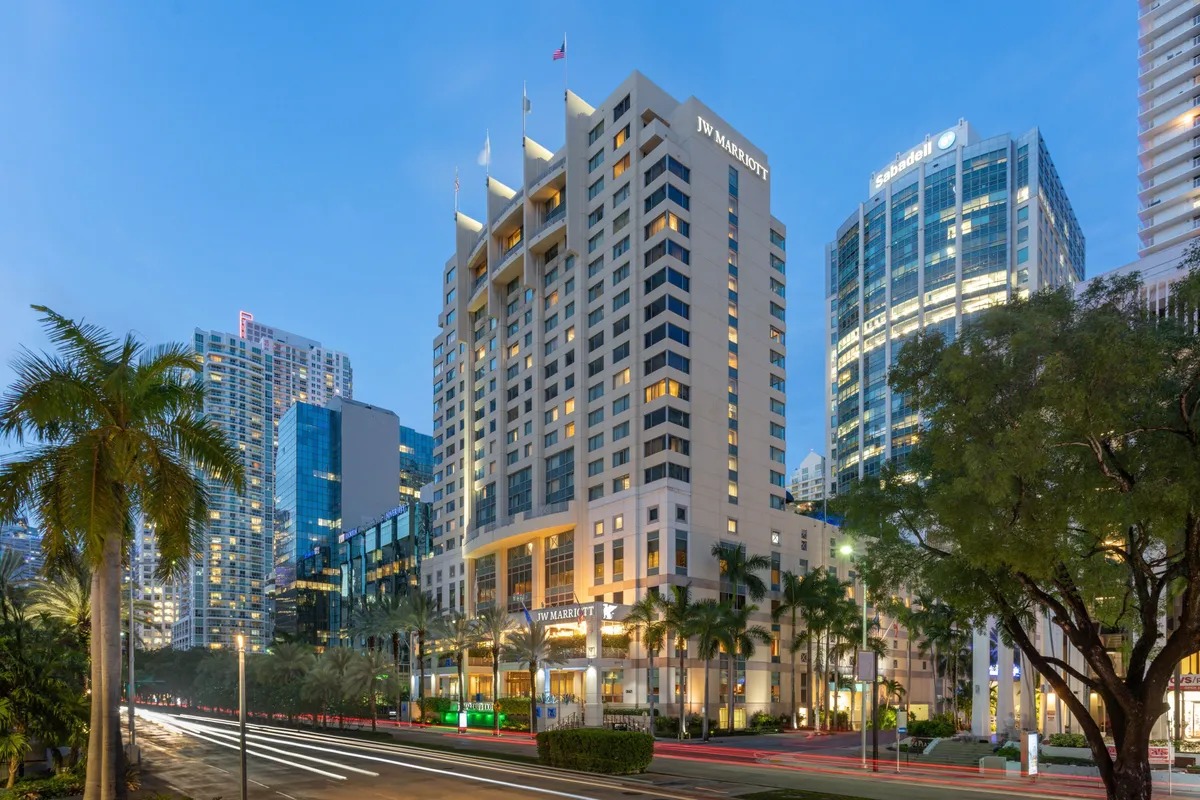
Essential Focus Areas for JW Marriott Miami Event Success
Utilizing bay and skyline views to elevate attendee engagement and brand presentation
Aligning exhibit elements with the scale and flow of hotel meeting environments
Coordinating with venue-specific technology infrastructure for optimal impact
Navigating Brickell district routing and timing for material deliveries
Integrating services from Miami's diverse supplier categories including AV and DMC partners
Adhering to manual-driven operational protocols unique to each property
Positioning events within the connected Miami-Dade and Broward meetings ecosystem
Miami planning context
The JW Marriott Miami, situated at 1109 Brickell Avenue in Miami's financial hub, presents a compelling option for organizations seeking to combine luxury accommodations with sophisticated meeting environments. This award-winning hotel features 296 spacious rooms and suites that offer stunning views of the Brickell skyline and Biscayne Bay, creating an inspiring backdrop for business gatherings, product introductions, and targeted industry activations. the property's design integrates comfort with functionality, making it well-suited for both domestic and international attendees who benefit from the multilingual staff's attentive service.
Planning events that incorporate exhibit components or branded displays at a conference hotel like the JW Marriott Miami demands focused attention to the specific operational parameters of urban hotel venues. Unlike larger convention centers with dedicated exhibition halls, hotel-based programs require designs and logistics that respect guest flow, ceiling constraints, power access, and integration with breakout sessions. These frameworks align exhibit elements effectively within the Brickell context while maintaining the property's standards for guest experience and operational flow.
Within Miami's multifaceted meetings landscape, the Brickell cluster serves distinct purposes compared to the Miami Beach convention corridor or the airport-west properties. This differentiation allows planners to select the JW Marriott Miami for high-touch corporate programs, executive conferences, and sponsor-driven experiences that leverage the area's dense concentration of financial institutions and professional services firms.
The Role of JW Marriott Miami in Miami's Downtown and Brickell Event Cluster
The Downtown, Brickell, and Biscayne Bay Core forms one of several key venue clusters supporting Miami's trade show and conference activity. This urban core area, which includes the JW Marriott Miami, caters particularly well to investor relations events, product launch sequences, sponsor activations, and corporate programs that benefit from proximity to major business decision-makers. the concentration of professional services, banking headquarters, and international trade organizations in Brickell creates natural synergies for targeted industry gatherings that might not require the expansive exhibit floors found at facilities with 500,000 square feet of exhibit space.
Compared to the 1,400,000 square feet of meeting and event space and 84 meeting rooms at the Miami Beach Convention Center, or the 172,000 square feet of conference space including 100,000 square feet of exhibition space at the Miami Airport Convention Center, properties like the JW Marriott Miami serve a complementary function. They excel in delivering intimate yet impactful experiences where the quality of interaction and the prestige of the setting take precedence over sheer scale. This makes the venue particularly appropriate for organizations whose objectives center on relationship building, detailed product demonstrations in controlled environments, or exclusive executive sessions.
Successful coordination in this cluster requires understanding the distinct neighborhood dynamics of Brickell. High-rise density, regulated loading zones, and integration with transit options all influence how exhibit materials arrive, how attendee traffic flows, and how support services are scheduled. These factors differentiate Brickell programs from those in the North Coastal Extension or the Airport, Doral, and West Access Belt where freight routing may present different parameters. Regional spillover into Broward County with its 350,000 square feet of contiguous exhibit space further expands options for connected programming across South Florida.
Proximity to financial institutions supports targeted corporate outreach
Biscayne Bay views enhance premium event positioning
Urban infrastructure requires precise scheduling of deliveries and setups
Complements rather than competes with larger convention assets in Miami-Dade and Broward counties
Property Features and Meeting Infrastructure at JW Marriott Miami
The JW Marriott Miami distinguishes itself through its combination of 296 well-appointed rooms and suites with dedicated meeting facilities that incorporate contemporary technology solutions. the property's location at 1109 Brickell Avenue places it directly within the pulse of Miami's commercial activity while offering guests and attendees sweeping perspectives of both the evolving skyline and the waterfront. These visual elements can be strategically incorporated into event theming and exhibit design to create memorable impressions aligned with corporate objectives.
Modern meeting spaces at the hotel are designed to accommodate a variety of configurations, supported by the latest in presentation and connectivity technology. This infrastructure enables exhibitors and presenters to deliver high-definition content, facilitate interactive sessions, and maintain smooth communication throughout multi-day programs. the multilingual staff adds another layer of operational support, helping to ensure that international delegates receive consistent service levels from arrival through departure and across all event components.
When incorporating custom exhibit elements or branded environments, planners must work within the spatial realities of hotel conference rooms rather than purpose-built exhibition halls. This typically favors modular display systems, carefully engineered lighting solutions, and digital enhancements that complement rather than overwhelm the room architecture. Understanding these constraints early in the planning cycle allows for designs that maximize impact while maintaining compliance with property guidelines and operational requirements.
Initial inquiries can be directed to (305) 329-3500. the venue listing through official Miami and Miami Beach resources provides additional reference points for preliminary planning documentation and contact protocols.
Developing Effective Exhibit and Display Solutions for Hotel Venues
Creating successful exhibits for the JW Marriott Miami involves adapting trade show best practices to the more intimate scale of conference hotel environments. Rather than large-scale booth constructions typical of facilities with 350,000 square feet of contiguous exhibit space, displays here tend toward sophisticated product showcases, interactive demonstration stations, and branded lounges that facilitate conversation. the goal shifts from attracting crowds across vast halls to nurturing quality engagements within a luxury setting that reflects the prestige of the Brickell financial district.
Design considerations include typical ceiling heights in hotel ballrooms, strategic power distribution points, and the need to preserve clear pathways for attendees moving between sessions or to adjacent breakout spaces. Materials should be selected for efficient installation and removal to align with hotel turnaround requirements between events. Digital integration becomes particularly valuable, allowing dynamic content that can be updated throughout the program without physical modification to the core display structure.
Coordination with exhibitor-appointed contractors plays an important role in these environments. Clear documentation of setup timelines, material handling procedures, and dismantling sequences helps prevent conflicts with other hotel operations or concurrent events. the planning process benefits from early dialogue with all stakeholders to align expectations regarding what can be achieved within the venue's specific parameters and the broader operational context of urban Brickell.
This approach ensures that exhibit elements enhance rather than compete with the property's architectural features and the natural visual draw of the bay and skyline views, creating cohesive environments that support both educational content and networking objectives.
Prioritize conversation-friendly configurations over high-traffic booth designs
Incorporate technology to expand informational capacity without increasing physical footprint
Select materials appropriate for urban hotel loading and storage limitations
Design for rapid deployment and breakdown to respect property schedules
Logistical Planning Specific to Brickell and Downtown Miami
The urban character of Brickell introduces particular logistical considerations for event planners. Delivery windows, loading dock access, and material routing through high-rise structures require precise timing to avoid disrupting either the JW Marriott Miami operations or the surrounding business community. Freight timing becomes especially critical for larger exhibit components or technology installations that cannot be managed through standard guest entrances or during peak business hours.
Neighborhood routing in this part of Miami involves awareness of traffic patterns along Brickell Avenue and adjacent thoroughfares, as well as coordination with transportation providers experienced in downtown deliveries. the proximity to Biscayne Bay also presents occasional possibilities for certain specialized logistics, though these require detailed advance planning and adherence to applicable regulations. These elements form part of the district-level differentiation that separates Brickell operations from beachfront or western access belt venues.
Effective planning frameworks address these realities by building in appropriate buffer periods and maintaining clear communication channels with venue staff, suppliers, and contractors. Documentation of all procedures according to the property's event manual helps ensure that installations proceed without incident and that all materials are properly accounted for during move-out phases, minimizing potential conflicts with the hotel's regular guest services.
These logistical elements contribute to the overall operational picture that distinguishes programs in the Downtown, Brickell, and Biscayne Bay Core from those in other Miami clusters, supporting more integrated approaches across the connected Miami-Dade and Broward regional market.
Engaging Miami's Comprehensive Supplier Ecosystem
The Greater Miami area maintains a robust network of specialized suppliers that support events at properties throughout Miami-Dade and Broward counties. Categories include audio-visual and film services, catering operations, destination management companies, transportation providers, staffing resources, and entertainment booking agencies. for programs at the JW Marriott Miami, tapping into this ecosystem allows planners to augment the hotel's in-house capabilities with precisely calibrated external expertise matched to specific program requirements.
Rather than relying on single-source solutions, the market structure encourages strategic assembly of vendor teams tailored to each event's unique requirements. This approach proves particularly valuable for complex programs that combine exhibit elements with educational sessions, networking functions, and experiential activations. the supplier directory maintained by the Greater Miami Convention and Visitors Bureau serves as a valuable reference for identifying qualified partners with demonstrated experience in the regional meetings environment.
When coordinating these services, clear delineation of responsibilities between the hotel, outside suppliers, and exhibitor-appointed contractors helps prevent overlap or gaps in execution. Written agreements that specify delivery protocols, setup authority, and service boundaries protect all parties while contributing to the overall success of the program and ensuring compliance with venue-specific guidelines.
This ecosystem breadth supports the mixed-vendor model common across South Florida venues, from major convention centers to specialized conference hotels, enabling scalable solutions that adapt to the distinct demands of Brickell-based events.
Audio-visual specialists for advanced presentation support
Catering partners for customized menu experiences
Destination management companies for comprehensive program oversight
Transportation providers familiar with Brickell routing patterns
Specialized staffing resources for exhibit management
Entertainment and experiential activation resources
Labor Considerations and Venue-Driven Coordination Models
Labor arrangements for events at the JW Marriott Miami, like most South Florida venues, follow property-specific guidelines rather than uniform regional rules. Official guidance from area convention resources emphasizes consulting each venue's event manual and working within the frameworks established by show management and the property itself. This venue-driven approach acknowledges the different operational realities across convention centers, resort properties, and urban conference hotels such as the JW Marriott Miami.
The market supports a mixed model where both house services and qualified outside providers can contribute according to the parameters of each event. the broad supplier ecosystem provides access to experienced personnel for technical installation, display management, and related services. However, final determinations regarding labor categories always rest with the specific documentation for the individual program, ensuring alignment with the JW Marriott Miami's operational protocols and any show-specific requirements.
Planners benefit from early review of all applicable manuals and contracts to understand the precise requirements for their event. This preparation helps avoid last-minute adjustments and ensures that all participants operate with clear understanding of their roles. the coordination process should include contingency planning for various scenarios while maintaining strict adherence to documented protocols and venue-driven directives.
This flexible yet structured approach has supported Miami's growth as a major meetings destination, allowing organizers to scale their events appropriately whether they center on major convention assets or more focused programs at distinctive properties like the JW Marriott Miami in Brickell.
Integration with Regional Convention Assets and Overflow Strategies
While the JW Marriott Miami operates effectively as a standalone conference destination, it also functions well as a component of larger regional event strategies. When primary activities occur at the Miami Beach Convention Center with its substantial exhibit and meeting inventory, or at the Broward County Convention Center with plans for significant campus expansion beyond 1.2 million square feet, satellite programming at Brickell properties can accommodate overflow sessions, executive meetings, or specialized sponsor events.
This interconnected approach to South Florida venue utilization treats Miami-Dade and Broward counties as a unified operating region for major shows, overflow programs, incentive events, and resort-based activations. Transportation links between the beach, downtown, airport west, and north coastal areas enable efficient movement of personnel and materials across the ecosystem. Understanding these relationships allows for more sophisticated event architecture that leverages the strengths of multiple venue types within the connected market.
For organizations planning multi-venue programs, the JW Marriott Miami offers particular value for hospitality functions, detailed breakout sessions, or invitation-only components that benefit from its upscale environment and central Brickell location. Coordination across these assets requires master scheduling that accounts for transit times and the distinct operational rhythms of each property, from the Coastal Convention Center at Fontainebleau to airport-adjacent facilities.
Such strategies maximize the depth of the regional venue offering while maintaining focus on district-level nuances, ensuring that each component from exhibit displays to corporate activations receives appropriate operational attention.
Complementary programming to larger convention center events
Strategic use for executive and sponsor hospitality
Integration with airport and north coastal venue clusters as needed
Regional perspective spanning Miami-Dade and Broward counties
Frequently Asked Questions About Planning Events at JW Marriott Miami
Q: What makes the JW Marriott Miami distinctive for corporate events in Brickell?
The property combines 296 luxury rooms and suites with modern meeting facilities and the latest technology, all within a prime Brickell location offering views of the skyline and bay. This creates an upscale environment particularly suited for high-level corporate programs, product launches, and specialized exhibits that benefit from the area's business density.
Q: How should exhibit designs be adapted for the JW Marriott Miami compared to larger convention centers?
Hotel conference environments favor more intimate, conversation-oriented displays rather than large footprint booths. Focus on modular systems, integrated technology, digital enhancements, and designs that respect room architecture, attendee flow patterns, and the property's specific operational parameters.
Q: What supplier resources are available for events at this Brickell venue?
Miami maintains a comprehensive supplier ecosystem covering audio-visual services, catering, destination management companies, transportation, staffing, and entertainment. These resources complement the hotel's capabilities and can be coordinated according to each event's requirements and venue-specific guidelines.
Q: Are labor arrangements standardized across Miami venues including the JW Marriott Miami?
No. Labor follows venue-specific guidelines and event manuals rather than blanket regional rules. Each property maintains its own protocols that planners must review and follow for compliant operations, supporting a mixed model driven by individual show documentation.
Q: How does the Brickell location affect event logistics for exhibits and meetings?
The urban high-rise setting requires careful attention to delivery timing, loading procedures, neighborhood routing, and freight schedules. Planning should account for traffic patterns, building access, and district dynamics that differ from beach corridor or airport-adjacent venues.
Q: Can the JW Marriott Miami support components of larger regional trade shows?
Yes. the property works well for overflow programming, executive sessions, sponsor hospitality, or complementary activations connected to major events at the Miami Beach Convention Center, Broward County Convention Center, or other regional facilities across the unified South Florida market.