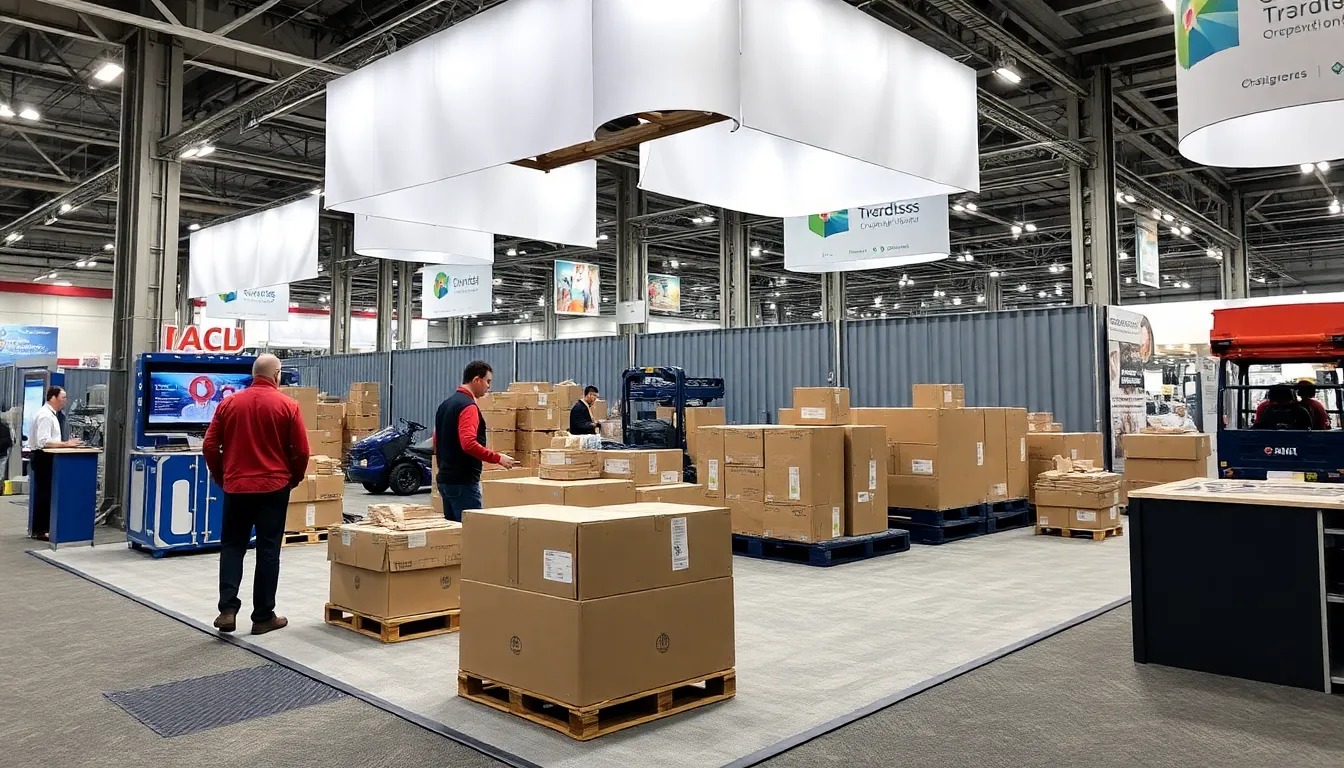
Core Components of Effective Custom Crating in Miami
Dimensional precision matching exhibit footprints for Miami Beach Convention Center-scale installations
Climate-resistant materials countering South Florida's humidity in transit to Downtown Miami venues
Shock-mounting systems for vibrations on routes from MIA through Doral's freight belts
Integrated labeling compliant with multi-venue freight manifests across Miami-Dade and Broward
Tracking embeds for real-time monitoring during Collins Corridor and Biscayne Bay deliveries
Reusable engineering for repeated activations between Miami Airport Convention Center and spillover sites
Documentation kits aligning with GMCVB supplier protocols for transportation handoffs
Miami planning context
Planning a trade show presence in Miami demands meticulous attention to asset protection, especially when shipping to facilities such as the Miami Beach Convention Center's 1.4 million square feet of meeting and event space or the Miami Airport Convention Center's 172,000 square feet of conference and exhibition areas. Custom crating goes beyond standard packaging by engineering tailored enclosures that account for the unique dimensions and vulnerabilities of exhibit elements, from towering modular structures to delicate interactive displays. This approach mitigates risks posed by Miami's venue clusters, including the congested Collins Avenue corridor in Miami Beach, the urban trucking routes through Downtown Miami and Brickell, and the high-volume freight movements along the airport-west access belt in Doral and Miami Springs.
The Broward County Convention Center further complicates regional logistics with its 350,000 square feet of contiguous exhibit space serving as overflow for Miami-Dade events, requiring crating solutions that endure extended hauls across South Florida interstates. Asset protection extends to documentation and tracking protocols that align with each venue's freight handling procedures, whether docking at the Miami Beach Convention Center's expansive loading bays or navigating the James L. Knight Center's downtown constraints. by prioritizing custom crating, exhibitors safeguard investments against transit shocks, humidity exposure, and handling stresses inherent to these Multimillion Square Foot environments.
Coordinating crating with broader supplier ecosystems listed by the Greater Miami Convention and Visitors Bureau, including transportation and employment services, ensures smooth integration into show-specific timelines. This venue-driven strategy respects the mixed labor positioning across Miami's convention centers, resorts, and airport facilities, where final field conditions hinge on exhibitor manuals and organizer directives.
Navigating Miami's Venue-Specific Freight Challenges
Miami's trade show landscape, led by the Miami Beach Convention Center's 500,000 square feet of versatile exhibit space and 84 breakout rooms, presents freight coordination hurdles that custom crating directly addresses. Shipments bound for this South Beach hub must traverse the Miami Beach Convention and Collins Corridor cluster, where narrow access points and high pedestrian volumes amplify handling risks for uncrated assets. Custom solutions incorporate reinforced bases and forklift-compatible skids designed for the venue's 60,000 Square Foot Grand Ballroom adjacent exhibit halls, preventing damage during offloading amid peak convention traffic.
The Downtown, Brickell, and Biscayne Bay Core, encompassing venues like the James L. Knight Center with its 16,000 Square Foot largest room, demands crating that facilitates tight urban maneuvers. Brickell's high-rise density and Edgewater's waterfront proximity mean enclosures must withstand elevator staging and service elevator constraints, with padding calibrated for vertical lifts common in Miami Design District activations. This cluster's investor events and sponsor programs often feature high-fragility prototypes, making form-fitted crating essential for preserving structural integrity through Wynwood's creative routing.
Extending to the Airport, Doral, and West Access Belt, the Miami Airport Convention Center's 100,000 square feet of exhibition space and 45 breakout rooms highlight air-cargo proximities that still require robust protection against trucking jolts to Hialeah or Sweetwater warehouses. Custom crating here emphasizes desiccant packs and vapor barriers, tailored for the 29,000 Square Foot ballroom's catering-adjacent setups where moisture from regional cuisine services could infiltrate standard packaging.
Pallet configurations optimized for 12-mile MIA-to-Miami Beach hauls
Edge guards for protruding elements in Midtown Miami turns
Strapping patterns matching Broward County Convention Center's 350,000 Square Foot overflow docs
Engineering Crates for Exhibit Fragility Profiles
Trade show assets destined for Miami's 1.4 Million Square Foot Miami Beach Convention Center demand crating that maps fragility profiles across modular panels, LED arrays, and tension fabrics. Engineering begins with 3D scans ensuring millimeter tolerances for components spanning the venue's nearly 500,000 square feet of exhibit floor, where misalignment from transit compromises immersive booth experiences. Internal bracing systems distribute loads dynamically, simulating the stop-start patterns of Collins Avenue freight lines.
In the Miami Convention Center's adjoining structures with the James L. Knight Center, crating must accommodate hybrid conference-trade show formats, protecting AV integrations vulnerable to electromagnetic interference during Brickell Bay crossings. Custom dividers segregate power supplies from graphic overlays, with foam densities graduated to absorb impacts from Midtown's pothole-prone arterials. This precision preserves the theater-capacity scale of 5,000 seats nearby, where exhibit tie-ins require pristine condition upon arrival.
For Coastal Convention Center at Fontainebleau Miami Beach's Biscayne Bay views, outdoor-rooftop hybrid events necessitate weather-sealed crates with IP-rated gaskets, guarding against salt-air corrosion en route from Bal Harbour staging areas. Reusability hinges on modular disassembly, allowing repeated deployment to Faena Forum without degradation over South Florida's event calendar.
Material Selection for South Florida Conditions
Selecting materials for custom crating in Miami prioritizes resistance to the tropical climate affecting shipments to the Miami Airport Convention Center's 172,000 square feet. Oriented strand board exteriors paired with polyethylene liners repel humidity spikes common in Doral's warehouse belts, while plywood alternatives offer lighter weight for West Miami's bridge clearances. These choices align with GMCVB transportation suppliers, ensuring compatibility with regional carriers servicing 100,000 Square Foot exhibition zones.
Exhibit protections for Brickell and Wynwood activations incorporate closed-cell foams that maintain cushioning under 90-degree heat loads, critical for Downtown Miami's glass-tower reflections exacerbating thermal stress. Anti-fungal treatments embedded in liners prevent mold during stalled hauls to the 31,639 Square Foot Broward meeting venue, preserving fabric-wrapped pedestals and vinyl applications.
Sustainability enters via recycled-content crates for Miami Beach's eco-conscious resorts, with hardware like cam latches facilitating tool-free rebuilds at Surfside or Bay Harbor Islands peripherals. This material matrix supports the mixed supplier ecosystem, from AV firms to employment services, in executing protected deliveries.
VCI paper emitters for ferrous metals in exhibit hardware
Corrugated inserts for lightweight Mid-Beach routing
Galvanized fittings for saltwater exposure near Key Biscayne
Smooth Integration with I&D and Logistics Timelines
Custom crating dovetails with Miami venue manuals, streamlining I&D for the Miami Beach Convention Center's 84 meeting rooms by including sequenced unpack protocols. Labels denote weight distributions for the Grand Ballroom's rigging points, coordinating with show organizers' labor directives in this Non Blanket Rule environment. Freight manifests embed QR codes linking to digital twins, expediting customs for international assets crossing into South Beach.
At the Miami Airport Convention Center, crating facilitates Just in Time staging for its three ballrooms, with pallet jacks integrated into base designs for DoubleTree catering overlaps. This respects venue-specific platforms, where outside vendors from GMCVB directories handle transportation without presuming unrestricted access.
Regional spillover to Broward County Convention Center's future 1.2 Million Square Foot campus requires crating that scales for 350,000 Square Foot contiguous spaces, with stackable configs optimizing truck decks on I-95 corridors linking Miami-Dade operations.
Breakdown diagrams for exhibitor-appointed coordination
Hazard labels per Knight Center downtown protocols
Re-crating kits for dismantle phases post-Fontainebleau events
Advanced Asset Protection Protocols
Beyond enclosures, asset protection in Miami encompasses serialized inventory synced to venue drayage logs for the James L. Knight Center's walkable downtown footprint. RFID tags embedded in crates provide geofencing alerts during Edgewater waterfront transits, mitigating theft risks in high-density Coconut Grove peripherals. Insurance binders reference crate specs, bolstering claims for Coral Gables activations.
For multi-venue strategies spanning Miami Beach to Midtown, protection layers include pressure sensors logging g-force exceedances en route, with data feeds to client dashboards. This venue-driven vigilance adapts to Faena Forum's cultural events, where bespoke sculptures demand vibration-dampened interiors.
GMCVB supplier integrations extend to employment services for supervised handoffs, ensuring Chain of Custody from MIA's 12-mile radius to North Beach resorts without local execution claims.
Strategic Planning for Multi-Cluster Deployments
Miami's venue clusters necessitate crating strategies that unify the Miami Beach Convention and Collins Corridor with Downtown Brickell's investor circuits. Standardized crate footprints allow cross-deployment from 500,000 Square Foot exhibit halls to Wynwood's design district pop-ups, with adjustable internals for varying booth scales. Logistics modeling factors beach access delays, prioritizing air-ride suspensions for Collins Avenue.
Airport belt efficiencies shine in protecting assets for Doral conventions, where 172,000 Square Foot MACC configs pair with Hialeah trucking to Broward overflows. Custom halving designs enable partial unpacks at James L. Knight, preserving full kits for sequential Miami Lakes events.
This cluster-spanning approach leverages South Florida's connected region status, with crating documentation bridging Miami-Dade and Broward freight variances.
Cluster-mapping schematics for route optimization
Scalable nesting for 84-room breakout synergies
Contingency liners for weather-impacted Surfside arrivals
Documentation and Compliance Alignment
Comprehensive manifests for Miami venues detail crate contents against exhibitor manuals, vital for Miami Beach Convention Center's sales and services team coordination. Digital packets include material safety data for AV integrations in 60,000 Square Foot ballrooms, aligning with GMCVB's full-spectrum planning support.
Brickell-area compliance extends to urban permitting stickers on crates, facilitating Edgewater and Midtown police checks during peak hours. for airport venues, TSA-aligned seals secure high-tech exhibits bound for 45 Breakout Room sessions.
Broward extensions mandate dual-jurisdiction labels, ensuring smooth 350,000 Square Foot transitions without repacking halts.
Frequently Asked Questions on Custom Crating in Miami
Q: Why is custom crating essential for Miami Beach Convention Center events?
The venue's 1.4 million square feet and 500,000 square feet of exhibit space involve complex freight from congested corridors, where tailored crating protects against specific transit vulnerabilities like Collins Avenue vibrations.
Q: How does crating adapt to Miami Airport Convention Center logistics?
With 100,000 square feet of exhibition space near MIA, crating incorporates air-cargo compatibilities and Doral trucking reinforcements, including desiccants for the 29,000 Square Foot ballroom's catering proximities.
Q: What materials handle South Florida's climate in custom crates?
Humidity-resistant plywood, polyethylene barriers, and anti-fungal foams safeguard assets en route to Downtown Miami or Broward County Convention Center's 350,000 square feet.
Q: How does crating integrate with venue I&D processes?
Labeled protocols and QR-linked manifests align with manuals for Miami Beach's 84 rooms or James L. Knight Center, streamlining exhibitor-appointed handoffs via GMCVB suppliers.
Q: Can crating support multi-venue South Florida strategies?
Modular, stackable designs enable deployments across Miami-Dade clusters to Broward overflows, with tracking for Chain of Custody in connected regional operations.
Q: What documentation accompanies Miami custom crating?
Serialized inventories, g-force logs, and compliance labels match venue-specific requirements, from Brickell urban rules to airport security protocols.